Average Reviews:

(More customer reviews)Are you looking to buy Let Them Eat Shrimp: The Tragic Disappearance of the Rainforests of the Sea? Here is the right place to find the great deals. we can offer discounts of up to 90% on Let Them Eat Shrimp: The Tragic Disappearance of the Rainforests of the Sea. Check out the link below:
>> Click Here to See Compare Prices and Get the Best Offers
Let Them Eat Shrimp: The Tragic Disappearance of the Rainforests of the Sea ReviewThe idea for this book originated as a story for National Geographic Magazine-- the article is a great preview for the book. The slide show is amazing, of course. http://ngm.nationalgeographic.com/2007/02/mangroves/warne-textKennedy Warne visits mangroves from Bangladesh to Eritrea to Panama and Brazil. Though the title references shrimp farms, the book is centered on the ecology of mangroves, the cultures they support, threats to their continued existence, and ecosystem services. Culture? Yes--just like the rainforests referenced in the subtitle, mangroves support people who depend on them for shellfish, charcoal, fisheries, and even honey. Their exploitation by small groups of people may be sustainable, but mangroves are vulnerable to coastal development for tourism, timber, and shrimp farms. Warne travels the globe and finds that many governments protect mangroves on paper, but enforcement is lacking and development is often unregulated. It's not all bad news though, there are some encouraging stories of innovative sustainable development and reforestation programs, mangrove restoration and mitigation. None of the policy or science is excruciating or boring, however. It reads more like a travelogue-- I was reminded of Douglas Adams's Last Chance to See, one of my favorite books. Tigers hunt the mangroves in Bangladesh, monkeys in Tanzania use their tails to lure crabs, a humanitarian/cell biologist leads reforestation efforts in Eritrea. It's fascinating stories that are linked by mangroves.
Warne says that he is interested in mangroves because "they're maligned, they're marginalized....Mangroves are underdogs." He champions them well. Though not everyone may find them beautiful, they provide services that should easily win friends, such as nursery habitat for fish and shrimp, roosting and nectar for birds, storm buffer, silt trap, and carbon sink.
Based on the title, I was expecting more comparison between the costs of shrimp farming and wild shrimp harvesting, but the shrimp farms are one of many issues in the book. The book is refreshingly free of instructions on how to live our lives or snobbery towards the first-world lifestyle. Warne does not talk down to the reader or preach. Highly recommended to naturalists, travelers, and anyone curious about the cultures and ecosystems of the world.
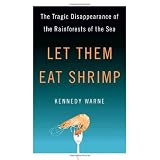
Let Them Eat Shrimp: The Tragic Disappearance of the Rainforests of the Sea OverviewWhat's the connection between a platter of jumbo shrimp at your local restaurant and murdered fishermen in Honduras, impoverished women in Ecuador, and disastrous hurricanes along America's Gulf coast? Mangroves. Many people have never heard of these salt-water forests, but for those who depend on their riches, mangroves are indispensable. They are natural storm barriers, home to innumerable exotic creatures—from crabeating vipers to man-eating tigers—and provide food and livelihoods to millions of coastal dwellers. Now they are being destroyed to make way for shrimp farming and other coastal development. For those who stand in the way of these industries, the consequences can be deadly.
Want to learn more information about Let Them Eat Shrimp: The Tragic Disappearance of the Rainforests of the Sea?
>> Click Here to See All Customer Reviews & Ratings Now

0 comments:
Post a Comment