Average Reviews:

(More customer reviews)Are you looking to buy Culturing Live Foods: A Step-by-Step Guide for Culturing One's Own Food for the Home Aquarium? Here is the right place to find the great deals. we can offer discounts of up to 90% on Culturing Live Foods: A Step-by-Step Guide for Culturing One's Own Food for the Home Aquarium. Check out the link below:
>> Click Here to See Compare Prices and Get the Best Offers
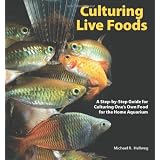
Culturing Live Foods: A Step-by-Step Guide for Culturing One's Own Food for the Home Aquarium ReviewCulturing Live FoodsBy
Michael R. Hellweg
Since Mike Hellweg is an old and valued friend/colleague in the tropical fish hobby, my opinions about his new book "Culturing Live Foods" may be a little biased - although they really need not be. "Culturing Live Foods" is a much-needed, and excellently written book, and it is an important contribution to the aquarium hobby. Mike is well known throughout the hobby as not only an accomplished writer, but also a master breeder, and he shares with us the fact that much of his success in breeding fishes comes from giving live foods to both the breeders, and the offspring.
"Culturing Live Foods" starts with a very interesting discussion of the history of fish foods, and the reasons for feeding live foods today, even though we have a wide variety of excellent frozen and dry foods available to us. The book then discusses the tools and containers needed, and getting starter cultures, for live foods. The foods themselves start with the smallest ones that are used - phytoplankton, or "Green water". Protozoans, or "infusoria" are then discussed, and then somewhat larger foods such as copepods, rotifers and vinegar eels. Much space is devoted to brine shrimp, which is fitting as they are probably the most common live food in the hobby. Mike discusses hatching, enriching and growing live brine shrimps to adults, as well as decapsulating the cysts (eggs).
As the book progresses we move up in size for the live foods, from worms (whiteworms, tubifex, blackworms and earthworms) to snails and crustaceans such as daphnia, moina and mysis shrimps. Other shrimps such as glass or grass shrimps and various species of Neocaridina are covered. Insects are the next category, and they include flour beetles, fruit flies, mealworms and mosquito larvae - including the constant battle between hobbyists and spouses about whether the standing water that has been left out was left there on purpose or by mistake, the net effect being a nice population of mosquito larvae that the hobbyist finds terrific for feeding fish, and the spouse sees only as a source of biting insects. The final group of live foods are fish, and here Mike mentions the problems with buying feeder fish from the local fish store (or bait store), and he strongly suggests that hobbyists raise their own feeder fish if at all possible.
Mike's book is packed with a wealth of detailed information, and yet it is much more than a simple "How To" book. It is an interesting, well written and very informative book, and covers all aspects of live foods, from starting cultures to collecting foods from the wild. There is an excellent group of resources at the end of the book in terms of related books, magazines, Internet sites and suppliers of live foods and cultures. "Culturing Live Foods" should be in the library of any fish hobbyist who wants to keep, and breed, fish successfully.
Culturing Live Foods: A Step-by-Step Guide for Culturing One's Own Food for the Home Aquarium Overview
Culturing Live Foods is an essential guide for hobbyists who want to feed their aquatic pets a natural diet. It includes up-to- date, authoritative information on the best bacteria, worms, crustaceans, plants, shrimps, insects, and more to offer as nutritious foods for one's fishes, whether they are larvae, juveniles, or full-grown adults. It is also the first book to devote in-depth coverage to recently adopted live foods like rotifers, cyclops, Walter worms, blackworms, Dero worms, Halocardina and Neocardina shrimp, and Mysis shrimp.
This comprehensive guide covers the most popular live foods for home aquaria, reviews their benefits, and gives step-by-step instructions on how to culture and harvest them. And not only does Culturing Live Foods focus on freshwater cultures, but it also includes cultures for saltwater aquaria. Also, some cultures detailed in the book can be used not only by aquarium hobbyists but also by amphibian and reptile hobbyists.
This exclusive one-stop source of culturing information is a welcome innovation to obtaining information that once could only be found on the Internet and in outdated books.
Want to learn more information about Culturing Live Foods: A Step-by-Step Guide for Culturing One's Own Food for the Home Aquarium?
>> Click Here to See All Customer Reviews & Ratings Now

0 comments:
Post a Comment